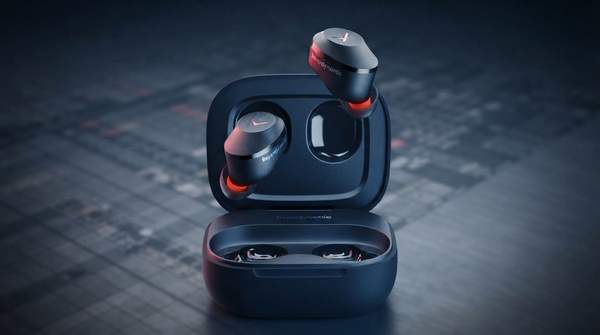
If you want wireless earbuds that treat music seriously, the short answer from the current expert record is a two-way choice: the Devialet Gemini II, which CNET's reviewer credits with a rich, detailed sound and a wide soundstage, and the Sony WF-1000XM6, which the same reviewer says jumped to the top of his best-earbuds list. A third, budget-conscious option, the Noble Osprey, earns praise for dual-driver sound and robust EQ at $199. This guide explains how those judgments are made — the objective measurements behind tonal accuracy and timbre, and the subjective listening behind soundstage — so you can match a model to your own priorities rather than chase a single "best" score.
Understanding Audiophile Metrics: Tonal Accuracy, Timbre, and Soundstage
Tonal accuracy is the foundation of any audiophile judgment. SoundGuys, whose lab work underpins much of the objective data here, defines it practically: the reviewers prioritize earbuds whose default tuning aligns with their preference curve, or that offer a capable enough EQ to get there. In other words, a well-tuned earbud should reproduce frequencies in proportions that listeners consistently prefer, without forcing you to fight the tuning with corrections.
Timbre is the companion concept, and SoundGuys quantifies it. Their sound quality scores are generated by a virtual panel of listeners modeled using the MDAQS algorithm, run against a specific stimulus file captured through a B&K 5128 acoustic test head — a standardized rig that makes the scores directly comparable across products. Within that system, the Timbre subscore carries the most weight for audiophile evaluation, because it reflects how faithfully an earbud reproduces the full frequency spectrum and timing information. That is the measurable proxy for whether a violin sounds like a violin.
Crucially, the responsible reviewers do not treat lab data as sufficient on its own. SoundGuys pairs all objective data with extended subjective listening across a range of genres and source material, so that, in their words, recommendations "reflect both what the measurements show and what your ears are likely to confirm." TechGearLab takes a similar hybrid approach, having spent over 2,500 hours testing more than 55 wireless earbuds, with sound quality as the heaviest-weighted metric at 35 percent of its composite score, judged on clarity, balance, detail, and immersive qualities. Soundstage — the sense of space and placement around you — sits on the subjective side of that divide, assessed by expert listeners rather than a single number.
Devialet Gemini II: Rich Detail and an Expansive Soundstage
The Devialet Gemini II is the model in the current evidence whose subjective sound description is most explicit. CNET's assessment, in David Carnoy's best-sounding earbuds roundup, lists among its pros a "rich, detailed sound with wide sound stage," alongside decent noise-canceling for audiophile-grade wireless earbuds and a design the reviewer describes as a miniature version of Devialet's eye-catching Phantom speakers. For a listener whose priority is immersion — the feeling that a live recording surrounds you rather than plays at you — that combination of detail and spaciousness is the specific quality to look for.
The same review is candid about the trade-offs, and they matter for an audiophile on a practical level. The Gemini II is expensive, and CNET notes that more than two years after launch its price hasn't dropped. Battery life is 5 hours per charge, which the reviewer calls slightly below average. None of that touches the sound quality itself, but it defines the cost of choosing it: you are paying a premium and accepting shorter listening sessions for the sound profile. The buds are also 40 percent smaller than their predecessor, which the review says helps deliver a more comfortable, secure fit to more ears — relevant if your audiophile listening sessions run long.
Sony WF-1000XM6 and Noble Osprey: Top-Tier Sound at Two Very Different Prices
Sony's flagship earns its place on the strength of one clear expert judgment: Carnoy writes that Sony's WF-1000XM6 earbuds "just jumped to the top of my best earbuds list," in a roundup whose organizing criterion is sound quality. The model carries a 9.2 score breakdown in CNET's listing, with up to 8 hours of single-charge battery life with ANC on and 24 hours total with the case. Sony also appears in SoundGuys' brand-level assessment of top audiophile earbud makers, alongside Sennheiser, Grell Audio, Creative, and Master & Dynamic — companies SoundGuys says have consistently delivered for discerning listeners, while emphasizing that its recommendations rest on each product's measured performance rather than prestige.
The Noble Osprey is the value play, and CNET's take on it is unusually specific about why it suits an audiophile. Priced at $199 and named the best-sounding earbuds under $200 in the roundup, it offers "great sound with dual drivers," robust equalizer options for tweaking the sound profile, and LDAC audio support for Android users — though the review notes it lacks aptX support. Noise canceling is described as decent for audiophile buds that prioritize sound quality, and battery life is only OK at up to 5 hours with ANC on, with no wireless charging or ear-detection sensors. For a listener who wants to shape the tuning themselves rather than accept a fixed signature, that EQ depth plus LDAC is the distinguishing feature.
Audiophile Earbuds Comparison: Objective Data Meets Subjective Experience
The table below juxtaposes what the measurements-driven sources establish against what the expert listeners report, model by model. Read it as a decision aid: the objective column tells you how faithfully a model is judged to reproduce music; the subjective column tells you what kind of listening experience that translates into. Where a cell is marked with a dash, the retained expert record does not supply that specific datum for that model.
| Model | Tonal Accuracy and Timbre (Expert/Lab Assessment) | Soundstage and Detail (Expert Listening) | Codec and Tuning Support | Primary Strength / Best For |
|---|---|---|---|---|
| Devialet Gemini II | — | Rich, detailed sound with a wide soundstage, per CNET's expert evaluation | — | Listeners who prioritize immersive, spacious reproduction; accepts premium price and 5-hour battery |
| Sony WF-1000XM6 | — | Placed at the top of CNET reviewer David Carnoy's best-earbuds list; 9.2 score breakdown in CNET's listing | — | Listeners wanting a flagship all-rounder with standout sound; up to 8 hours per charge with ANC on |
| Noble Osprey | Great sound with dual drivers, per CNET | — | LDAC for Android (no aptX); robust EQ options for tweaking the sound profile | Under-$200 buyers who want to shape their own tuning; 5-hour battery with ANC, no wireless charging |
The reasoning path here is straightforward. SoundGuys' methodology establishes that tonal accuracy against a preference curve and MDAQS Timbre scores are the primary objective criteria, and that codec support and EQ depth factor in as secondary criteria. CNET's listening judgments then supply the subjective layer. Mapped together, the framework points to a clear division of use cases: the Gemini II aligns with listeners who value the wide soundstage of live and large-ensemble recordings; the WF-1000XM6 suits those who want a top-rated flagship without choosing between sound and endurance; and the Osprey serves the hands-on audiophile who treats EQ as part of the hobby. One caveat belongs to the whole table: CNET's own reviewer reminds readers that "sound quality is subjective — and everybody has different musical tastes — so what sounds best to me may not sound best to you."
Making Your Choice: Aligning Earbuds with Your Audiophile Preferences
Select wireless earbuds based on a balance of objective tonal accuracy (e.g., neutral frequency response) and subjective qualities (e.g., soundstage, detail) that match your specific listening priorities. This article synthesizes published expert testing rather than conducting its own lab work, and it deliberately excludes non-audio factors like call quality and fitness tracking; the selection is curated, not exhaustive. SoundGuys' own framing supports the final step in the process: objective data exists so that you can "make an informed choice about the best wireless earbuds for your needs," with the confirmation left to your ears.
The measurable indicator of a good decision is this: the chosen earbuds consistently reproduce music with the desired tonal balance and immersive qualities across various tracks and genres, as confirmed by personal listening experience. Before committing, test your shortlist against the tracks you know best — a familiar live recording will reveal whether the Gemini II's spaciousness suits you, and a familiar vocal track will show whether the Osprey's EQ lets you reach the tuning you want. If a model passes that test across genres, the evidence-backed framework has done its job.
Sources
- Best Sounding Wireless Earbuds in 2026: AirPods, Sony and More — CNET
- The best wireless earbuds of 2026: Lab-tested by experts — SoundGuys
- Best audiophile earbuds — SoundGuys
- Best Wireless Earbuds of 2026 — TechGearLab