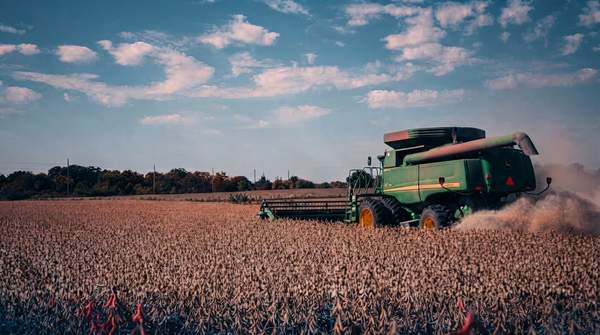
Beijing announced tariff reductions on a wide array of U.S. agricultural products, including corn, wheat, meat, and dairy, following last week's summit between leaders Xi Jinping and Donald Trump. Notably, soybeans, a major U.S. agricultural export, remain excluded from the tariff cuts and will continue to face additional duties. The move is part of a larger $60 billion package of reciprocal tariff reductions.
Specific Products Benefiting from Tariff Reductions
The tariff-reduction list, jointly issued by China's commerce ministry and the White House, covers a broad range of U.S. farm goods. Products set to benefit include corn, wheat, meat, and dairy. Further details from the commerce ministry statement specify that sorghum, vegetable oils and meals (such as soyoil and soymeal), along with other meat and dairy products, are also included. More than 90% of these covered products will be exempt from all additional tariffs previously imposed, reverting instead to most-favored-nation (MFN) tariff rates. The proposal identifies the products but does not specify an effective date for the tariff cuts.The Continued Exclusion of Soybeans
Despite the broad tariff reductions, soybeans, a top U.S. import item for China, are explicitly excluded from the new list. This means U.S. soybeans will continue to face an additional 10% tariff, a rate that traders have warned is too high for private Chinese crushers to absorb. The exclusion of soybeans is politically significant, as they were central to past trade disputes between the two nations.
Implications for the $17 Billion Purchase Commitment
The agricultural tariff cuts are linked to a White House statement regarding China's commitment to purchase $17 billion in U.S. farm goods annually through 2028. While the White House announced this target in May, China has not yet officially confirmed any specific target for such purchases. Trade in the agricultural products on the new tariff-reduction list, excluding soybeans, amounted to approximately $17 billion in 2024, according to Reuters calculations, roughly matching the reported commitment. An anonymous trader indicated that state-run companies will continue to buy U.S. soybeans, and the tariff cuts on other goods are expected to help China meet the $17 billion commitment.
Reasons Behind the Soybean Exclusion and Market Impact
The decision to exclude soybeans from the tariff cuts reflects China's dual strategy in trade relations. Analysts suggest that while Beijing aims to show good-faith efforts to improve relations and support U.S. farmers, it also seeks to maintain leverage and avoid appearing to make unilateral concessions. Soybeans have historically been a politically charged commodity in U.S.-China trade. The continued 10% additional tariff on U.S. soybeans means that private Chinese crushers will still face higher costs, potentially limiting their ability to purchase U.S. soybeans compared to state-owned enterprises. This situation could lead to negative margins for private crushers, as the landed cost for U.S. and Brazilian beans is roughly $595 per ton without tariffs, with Brazilian soybeans often preferred for their higher oil and protein content. Following the announcement, the most-active soybean contract on the Chicago Board of Trade (CBOT) saw a 1.38% decline.