A materials scientist spends another late night sifting through data, trying to connect the dots. A competitor’s recent patent on intergranular cracking in NMC 811 cathodes doesn’t quite line up with her team's latest cycle testing, which is buried in a separate, unstructured report.
Trying to cross-reference this against the last six months of academic papers, with over 40 new ones published daily, is a painstaking manual process. This scene plays out every day across the $400 billion global battery industry, where R&D data is vast, valuable, and catastrophically siloed.
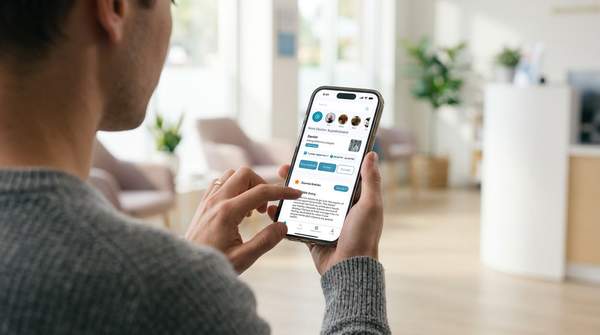
This fragmentation has become the single biggest bottleneck to innovation, but a new class of specialized AI tools is finally emerging to solve it. At the forefront is Wensura, an AI research platform from Delta3CoreTec LLC, built to be an AI copilot that speaks the language of battery science.
How Wensura solves the R&D data silo problem
The problem in battery research isn't a lack of data; it's the lack of connection between datasets. A researcher’s knowledge is scattered across public papers, patent databases, internal lab results, and team wikis. Simple keyword searches just can't keep up because they fail to grasp scientific intent or the relationships between concepts.
Wensura tackles this head-on by creating a centralized knowledge hub. The platform ingests and, more importantly, understands these varied data types. It becomes a unified interface for a team's collective intelligence, much like a 'Bloomberg Terminal for battery science'- a single source for critical industry data.
By linking previously isolated information, Wensura allows teams to see the whole picture and accelerate the entire battery material discovery process.
What is semantic search and how does it help battery researchers?
Semantic search goes beyond matching keywords; it understands the meaning and context behind a question. If you search for "cathode degradation," it doesn't just look for those two words. It understands the related concepts, like electrochemical impedance, capacity fade, and structural changes in materials like NMC 811.
For battery researchers, this is a game-changer. Wensura uses advanced techniques like pgvector similarity search on a knowledge graph trained specifically on battery science literature. This lets a scientist ask complex questions, such as, "What are the most promising synthesis routes for reducing cobalt in high-nickel cathodes while maintaining thermal stability?"
The platform can then pull together insights from an academic paper on solid-state electrolytes, a patent on cathode coatings, and an internal report on thermal runaway, delivering a synthesized answer that a simple keyword search could never find.
Can't I just use ChatGPT or other general AI for my battery research?
It’s a fair question, but the answer comes down to scientific rigor. Generalist AI models are impressive, but they weren't built for the precision, citation, and reproducibility that scientific R&D demands. They are prone to "hallucinations" and often can't provide the source-traceable evidence a research team needs to confidently build on an insight. This is where Wensura's specialized technology makes a critical difference.
Comparing a consumer tool to a professional R&D platform really highlights the gap:
- Answer Reliability: General AI relies on a single model, which can produce confident-sounding but incorrect information. Wensura’s proprietary Multi-LLM Peer Review pipeline has multiple specialized AI models independently analyze, critique, and synthesize an answer, which dramatically increases accuracy.
- Data Sourcing: General models pull from the vast, often unreliable, public internet. Wensura trains on a curated library of scientific papers and patents, and can securely integrate a company's private R&D data to ensure every result is relevant and high-quality.
- Reproducibility: Science demands reproducibility. Wensura provides fully cited, source-linked answers, so researchers can verify every piece of information and build upon it with confidence. General AI often gives unsourced or vaguely sourced claims.
- Specialization: Wensura’s AI copilot is designed from the ground up to understand the complex language of battery science, from technoeconomic analysis (TEA) to specific next-generation battery chemistries.
Inside Wensura's Multi-LLM peer review pipeline
Wensura's promise of "research-grade answers" isn't just marketing, it's baked into an auditable process. The Multi-LLM Peer Review system is what truly sets it apart from general-purpose AI.
When a user asks a question, the platform doesn't just send it to one model. Instead, several large language models are tasked with independently generating a comprehensive answer. Those initial answers are then passed to a separate group of AI models that act as blind peer reviewers. These reviewers critique each other's work on accuracy, citation quality, and logical coherence.
Finally, a synthesis model takes the best-rated answers and critiques to build a final, authoritative response, complete with citations. This multi-agent process was designed to mirror the rigor of academic peer review, filtering out mistakes and ensuring the final output is reliable enough for high-stakes R&D.
Is Wensura a worthwhile investment for R&D teams?
To see the platform's value, you have to weigh its cost against the cost of inefficiency. In any R&D organization, a battery scientist’s time is the most valuable resource. When they spend a huge portion of that time on manual data gathering and literature reviews, the opportunity cost is immense.
Wensura offers straightforward, tiered pricing, from a Starter Plan at $39/month to its popular Pro Plan at $149/month. Enterprise plans begin at $2,000/month and include a 99.9% SLA guarantee. When you consider that the platform could accelerate a single research project by weeks or even months, it can pay for itself almost immediately.
For teams that are still unsure, a 14-day free trial and a "cancel anytime" policy remove the financial risk.
Who is the Wensura platform designed for?
Wensura is a highly specialized tool built for people whose main challenge is managing immense data complexity. Its ideal users include:
- Commercial R&D Scientists: Researchers at battery manufacturers, or in the automotive and consumer electronics sectors, who need to speed up product development and analyze the competitive landscape.
- Materials Science Researchers: Academics and post-docs at universities and national labs exploring next-generation battery chemistries who need to demonstrate novel insights to secure funding faster.
- IP and Strategy Teams: Analysts who search battery IP and monitor technological threats and opportunities across thousands of new patent filings.
- Process Engineers: Teams focused on technoeconomic analysis (TEA) who need to optimize synthesis routes and predict the cost-performance tradeoffs of new materials.
The future of battery research starts here
The battery industry is at an inflection point. With data growing faster than any team can manually process, the researchers who will lead the next generation of breakthroughs are those who work smarter, not harder.
Wensura gives R&D teams the unified, intelligent platform they need to cut through complexity, uncover hidden insights, and accelerate discovery from months to weeks. In a field where speed and precision directly translate to competitive advantage, having an AI copilot that truly speaks the language of battery science is no longer a luxury - it is a necessity.