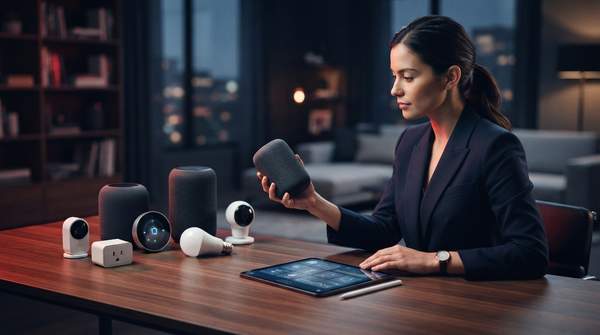
The single most important question when buying a smart home gift in 2026 is not which gadget is flashiest—it's which ecosystem the recipient already lives in. A brilliant device that fights their existing setup becomes a drawer ornament; a modest one that slots cleanly into their Alexa, Google, or Apple household gets used every day. This guide curates five well-received devices and maps each to the platform where it works best, so you can give a gift that integrates seamlessly rather than becoming a troubleshooting project.
Choosing the Right Smart Home Gift: Ecosystem First
WIRED's smart speaker reviewers put it plainly: the easiest way to choose a smart assistant device is to consider which ecosystem the recipient is already using in some capacity. If they're a big Google or Android user, a Gemini-powered speaker is described as a no-brainer; if they're an iPhone household, HomeKit-powered devices bring real benefits. That advice generalizes to nearly every smart home gift, because the platform—not the hardware—determines how the device is controlled, automated, and updated.
Platform analysts at Security.org, who scored the major ecosystems head-to-head, found meaningful differences in what each does best: Amazon Alexa earned the "widest compatibility" label, Google's Nest Hub Max took "best voice AI," and Apple HomeKit won "best for privacy." Those distinctions matter for gift-giving because they translate directly into how easily a device will fit the recipient's habits. A gift that matches their platform's strengths feels thoughtful; one that requires them to install a rival app and juggle two control systems usually does not.
One caveat before the recommendations: this is a curated list, not an exhaustive survey. It favors devices that are easy to set up and suitable for a general audience, and it synthesizes expert reviews rather than independent hands-on testing of every unit. Pricing is deliberately omitted, since it fluctuates constantly—check current tags before you buy.
Understanding the Major Smart Home Ecosystems
Amazon Alexa is the compatibility champion. Security.org credits it with integrations supporting over 400,000 smart home devices, and notes it's easy to set up and control third-party devices through Alexa Skills. Amazon also owns several home security companies, including Ring and Blink, with native integration across them. Adaprox's 2026 buying guide echoes this, describing Alexa's strength as extensive skill integration spanning everything from smart plugs to security systems, typically operated through Echo speakers and displays, with routines for automating home tasks. Newer Echo hardware adds Zigbee, Thread, and Matter support, which broadens what a single gift device can anchor.
Google Home stands out for voice intelligence. Security.org highlights the Nest Hub Max's industry-leading voice recognition and advanced first-party security cameras with familiar face detection, and CNET's 2026 gift guide highlights Gemini for Home, which can answer questions, schedule events, control devices, and make reminders at no charge. Adaprox adds that Google Assistant offers deep integration with Google services and strong natural language processing, working well with Nest products across thermostats, cameras, and lighting. The trade-off: this depth pays off most for people already in the Google or Android orbit.
Apple HomeKit is the privacy and cohesion pick. Security.org scored it highest of the three (7.9/10) for a platform that works seamlessly within the Apple ecosystem, processes many Siri requests on-device to minimize data sent to the cloud, and offers a reliable experience thanks to its closed system. The flip side of that closed design is narrower third-party options than Alexa's vast catalog, and the benefits concentrate on households already running iPhones and HomePods.