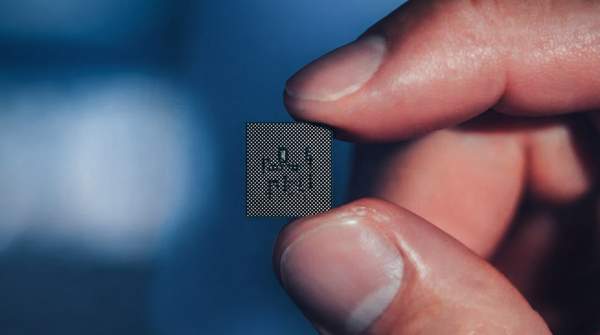
A Qualcomm Snapdragon processor is not one chip doing one job. It is a system-on-a-chip (SoC): a single package that places a general-purpose CPU, graphics processor, neural processing unit, and cellular modem side by side, each built for a different kind of work. Qualcomm's own developer documentation describes the design logic plainly: the CPU itself is split into "big" cores optimized for performance and "little" cores optimized for power efficiency, and understanding that split is what makes a phone fast when it needs to be and frugal when it doesn't.
The Core of Mobile Innovation: Qualcomm Snapdragon SoCs
Qualcomm, founded in 1985 by seven former Linkabit colleagues in Irwin Jacobs's home to build "QUALity COMMunications," began by developing Code Division Multiple Access (CDMA), a departure from the accepted telecommunications standards of the time that the company credits with changing wireless communications. That lineage runs from analog through 3G, 4G and 5G, and it explains why Qualcomm's portfolio today spans processors, modems, platforms, RF systems and connectivity products. The Snapdragon brand packages several of those disciplines into one SoC. On its homepage, Qualcomm describes its Windows-on-Snapdragon platform as integrating a CPU, GPU, NPU and modem "seamlessly" — a mobile-computing framing that mirrors the smartphone architecture. The point of integration is division of labor: rather than one fast, power-hungry processor handling everything, the system routes each task to the specialist that handles it most efficiently.
Balancing Act: Performance and Power Efficiency with big.LITTLE
The central constraint in mobile design is that performance costs battery. Qualcomm's developer documentation addresses this directly through ARM's big.LITTLE architecture, which it describes as composed of big cores optimized for performance and little cores optimized for power efficiency. The documentation frames the payoff in concrete terms: getting this balance right "translates to longer play sessions and a cooler thermal profile" — in its example, for a game running on a Snapdragon 865's Kryo 585 CPU, which is based on ARM's Cortex-A77. The principle generalizes beyond gaming.
A phone that ran every notification sync on a maximum-performance core would drain its battery and warm its case unnecessarily; a phone that ran every heavy workload on efficiency cores would feel sluggish. The architecture exists to avoid both failure modes by keeping two classes of cores available and assigning work according to intensity.