Luxury packaging is not simply an expensive box wrapped around a product. According to packaging designers and brand strategists, what separates a package customers keep from one they discard is a deliberately engineered multi-sensory experience built on four dimensions: tactile feel, sound, perceived weight and structure, and the opening ritual. Big Sky Packaging, a packaging consultancy, frames these as distinct strategic levers—tactile finishes that communicate craftsmanship, sound cues like clicks and closures that signal precision, weight and structure that enhance perceived value, and an opening experience that reinforces ritual and exclusivity. Each cue works, the firm argues, on a subconscious level, shaping buying decisions before a consumer reads a single word on the packaging. This article breaks those four dimensions down into a usable framework and shows how to brief a designer against it.
The Multi-Sensory Framework for Luxury Packaging
The framework rests on a simple premise: perception forms before the product is used. As Karly Oykhman writes for packaging supplier Paper Tube Co., the moment a customer picks up a package, they have already formed an opinion about the product inside—and that opinion is shaped by weight, texture, color, and what she calls "the quiet confidence of thoughtful design." Luxury packaging, in her summary, is about orchestrating multi-sensory details rather than simply wrapping a product in an expensive box.
The four dimensions can be evaluated independently, which is what makes them useful as a briefing and audit tool. Tactile experience covers materials and finishes—rigid board, textured paper, soft-touch coatings, magnetic closures. Sound design covers the acoustic signature of opening: the muffled clap of a case, the rustle of tissue, the snap of a closure. Weight and structure cover heft and rigidity. The opening ritual covers the sequence of layers and reveals. Deepwear's Bily Dimoski notes that luxury fashion houses have understood this for generations—a carefully wrapped garment, a sturdy box, or a reusable dust bag reinforces the craftsmanship behind the product—and that these principles are no longer reserved for established luxury brands.
Tactile Experience: The Feel of Luxury
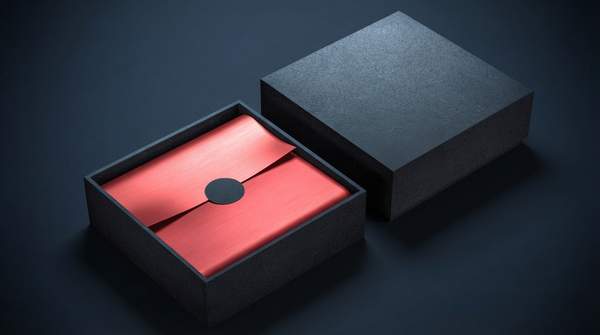
Touch is the first dimension because it is often the first physical contact a customer has with the brand. Design studio DesignerPeople recommends high-quality materials such as rigid boxes, silk-lined interiors, handcrafted wooden cases, and heavyweight textured paper—the more tactile, the better—and exclusive finishing touches including embossing, soft-touch lamination, and gold or silver foil stamping to add depth and refinement.
The strategic logic is that texture communicates craftsmanship before any verbal claim does. Deepwear describes how the texture of premium paper or the smooth closure of a magnetic lid "communicates craftsmanship without saying a word," helping customers associate the product with higher quality because the experience feels deliberate and complete. Luxury brands, Dimoski notes, often rely on these subtle elements rather than excessive decoration: restraint itself becomes a value signal. For a brand manager, the tactile brief is therefore specific: define the finish (matte, soft-touch, textured), the substrate weight, and the closure mechanism, rather than asking a designer for something that "feels premium."